The 1,000-Mile Great Lakes Adventures

Showing posts with label fresh water. Show all posts

Saturday, January 5, 2013

Slate and Oil...

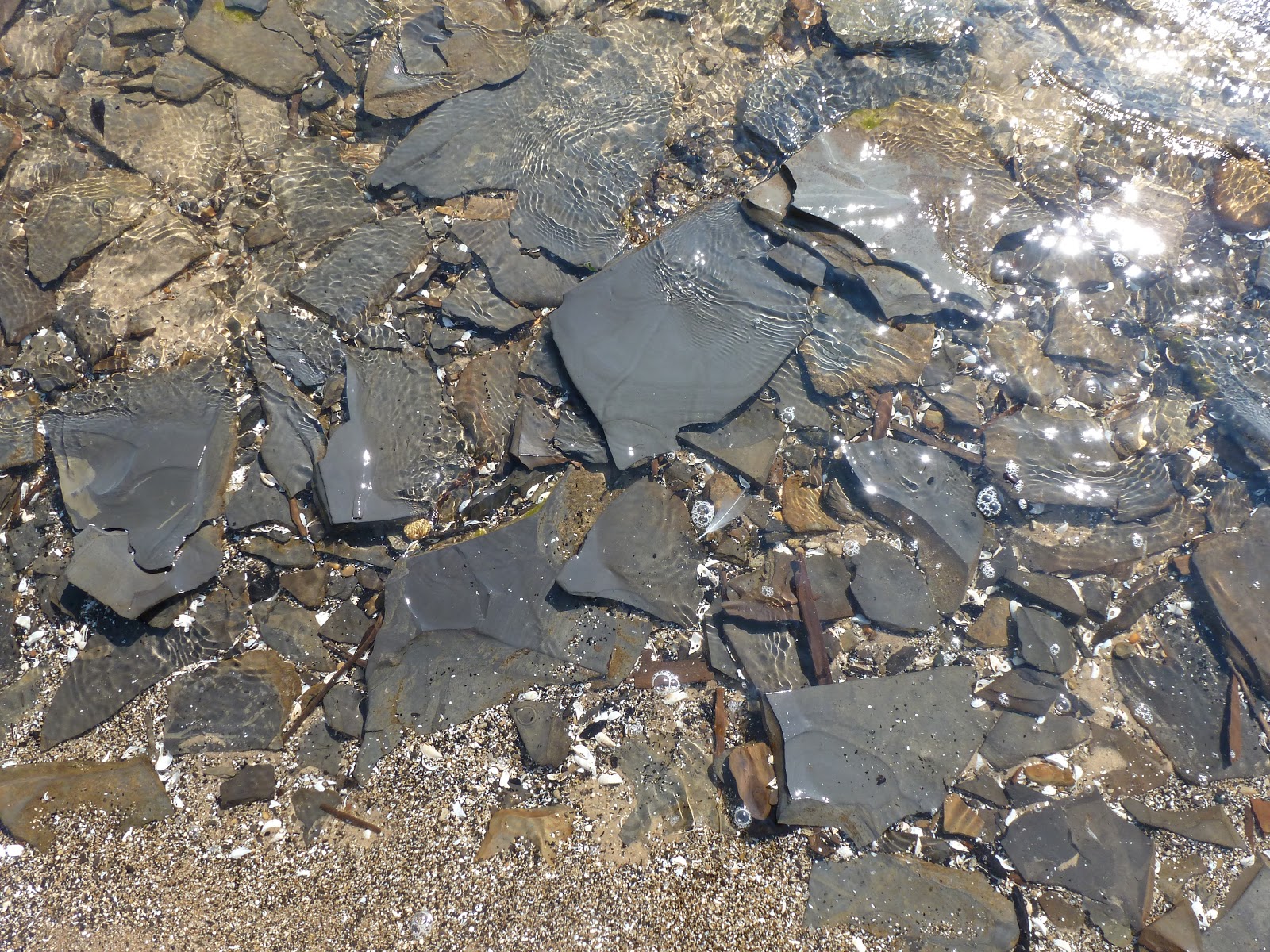
Shale on the shores of Lake Huron


The Great Lakes Basin has a bowl of shale underneath it, nested between other layers (sandstone, limestone, etc.).  

Sometimes the edge of this layer is exposed along the shoreline like near Alpena on Lake Huron and north of Traverse City on Lake Michigan. 

This stone naturally traps oil and natural gas within it, and there are places along the shoreline where oil is seeping out of these rock layers and into the lakes. 

This is a natural process that has been going on around the Great Lakes for thousands of years.


Oil seeps out from the shale layer


The patters are beautiful and colorful...


There are companies that want to frack this layer of shale in Michigan to extract the resources trapped there. 

The companies say that fracking is safe, but they will not disclose everything added to the fracking fluid. 


...as the oil/water mixture merges with the lake.

And the used fracking fluid is so toxic it is disposed of by pumping it deep underground, far underneath the water table.  

In this way, millions of gallons of fresh water are poisoned and removed from use forever.


Friday, March 18, 2011

World Water Day

The U.N. designates March 22 as the day of the year when we spotlight the global safe water and sanitation issue and the collective efforts underway to get solutions to those struggling and in need.

The Great Lakes contain 20% of the fresh surface water

in the WORLD.

The Great Lakes contain 90% of the fresh surface water

in the U.S.


We are blessed with this natural source of fresh water in the Midwest and over 40 million people get their drinking water from the Great Lakes. There are many areas on the planet, though, where people struggle to find clean drinking water and where proper sanitation is non-existent.

What can we do?

...from the "About Water Day" website:

"Scale up the solutions that are already working. US support for water and sanitation has produced demonstrable results in thousands of communities around the world. Solutions include digging wells and boreholes, harvesting rainwater, protecting springs, water filtering and purification, and building safe and affordable latrines. Sustainability is key: programs must be implemented in a fashion that is sustainable on a local level, in technical, financial, social, and environmental terms. Integrating simple and cost-effective water and sanitation solutions into child survival, health, and nutrition programs can dramatically decrease both child mortality and long-term developmental problems caused by the most common child killers - diarrhea, pneumonia and malnutrition.

Encourage decision makers to target US funding to the countries and communities most in need of first-time access. The US government must ensure the funding it provides for international water and sanitation programs benefits the people who need it most. Most of those living without safe drinking water and improved sanitation are poor people in impoverished countries. Helping to provide first-time access to safe drinking water and improved sanitation in those communities will also ensure progress toward other related goals: improved health, poverty alleviation, environmental sustainability, and increased educational opportunities."


I live in Michigan.

We are a peninsular people, surrounded by water.

We take fresh water for granted, but there are so many in our world who do not have fresh drinking water.

Fresh water is essential for life.

Sunday, January 25, 2009

Advocate for Lake Michigan

Earlier this month I had the pleasure of speaking with Mr. Joel Brammeier of the Alliance for the Great Lakes (http://www.greatlakes.org/Page.aspx?pid=243). He's the VP for Policy, which means he helps shape legislation, education, and grass roots efforts to protect and preserve the Great Lakes. He had suggested several books to read in an earlier e-mail exchange, and I had already read the books he listed.

Peter Annin's THE GREAT LAKES WATER WARS is an engaging history of water usage policy for the Great Lakes that details many legal skirmishes between the states and Canadian provinces which border the lakes and culminates with a detailed discussion of the Great Lakes Compact. This piece of legislation (which the Alliance for the Great Lakes was instrumental in helping shape and for also fostering its acceptance by all governing bodies concerned) is a landmark agreement on how and when and why the water of the Great Lakes can be used.

Access to fresh, clean water is going to be a defining issue worldwide in the next decades. The Great Lakes contains 20% of the world's fresh water. The Compact goes further to protect this water than any previous attempts to define the usage of this water.

My conversation with Mr. Brammeier was engaging and I will discuss many of the challenges facing Lake Michigan in my book about the trek: A 1,000 Mile Walk on the Beach.