The 1,000-Mile Great Lakes Adventures

Showing posts with label alliance for the great lakes. Show all posts

Monday, September 26, 2016

Lake Michigan Trek 7th Anniversary

Loreen Niewenhuis is an author, adventurer, and Great Lakes speaker. She has completed a trilogy of 1,000-mile adventures exploring the Great Lakes and has written three books about the Great Lakes [A 1,000-Mile Walk on the Beach *a Heartland Indie Bestseller*, A 1,000-Mile Great Lakes Walk *winner of the Great Lakes Great Reads Award*, and A 1,000-Mile Great Lakes Island Adventure]. To learn more about her work, or to book her as a speaker, go to http://LakeTrek.com


 It's hard to believe, but today is the 7th anniversary of the completion of my first 
Great Lakes Adventure -- 
hiking all the way around Lake Michigan!

Here I am at the beginning. I wasn't even sure I could complete the journey at this point. Over a 1,000 miles stretched ahead of me!

Day 1 beginning on Navy Pier in Chicago


Here are a few photos from the 
adventure...


Hiking in a winter storm near Saugatuck

Hiking the Mackinac Bridge 

Hiking the southern edge of the U.P.


The finish line back in Chicago greeted by family and friends


And so much more has happened since then. I've completed a trilogy of adventures 
(and three books)...

and two audiobooks (the third will be released next year).


After exploring over 3,000 miles of our amazing Great Lakes, I am more captivated than ever. 
And there is so much more to explore.


Cherish our vast inland seas.
Connect with the Alliance for the Great Lakes to stay informed and to learn what actions you can take to keep our waters healthy.

Other organizations working to protect our lakes:


Friday, December 9, 2011

Webinar takes on Clean Water Act rollbacks, invasive species, SS Badger

Click HERE to get access to a recent webinar about important issues
that impact our Great Lakes.


There are efforts to weaken the Clean Water Act at a time when our lakes are approaching a crisis due to invasive species, algae blooms, and other threats.

Be informed.
Contact your representatives in Congress.
View from the Empire Bluff Trail

Sunday, October 9, 2011

The Windward Shore


I have settled into a little cottage on the shores of Lake Michigan for a time. The season seems disjointed, though, with the unseasonably warm weather. We've had a stretch of seventy degree or higher days -- with two days pushing up against eighty degrees -- so it feels more like June and summer than October and fall. I just finished walking the beach for several miles, then turning back to retrace my steps back to my cottage.

It is odd for me to retrace my steps.

I am used to walking on and on and on...

It's been good hammock weather and I've been doing a lot of reading and writing here.


The first book I took with me to the hammock was just released by The University of Michigan Press.

It is by Jerry Dennis, the brilliant essayist whose work best captures the Great Lakes. This book is called THE WINDWARD SHORE: A Winter on the Great Lakes. It was a wonderful read and I'm glad I read it while the waves played background music along the shore.


Dennis has lived his life on the Great Lakes, mostly on Lake Michigan. He lives within sight and sound of the lake and he says:

"Day and night by the water -- it insinuates. Seeing it in all hours and in all seasons, hearing it even in your sleep, it changes you. You're reminded that everything is fluid, that time flows and carries us along from a springlike source to an oceanlike eternity. And although I know these inland seas are not oceans, I have followed them to an ocean and know the connectedness of waters -- and the connectedness of every other thing as well. And I know the lakes are treasures worth more than all the world's gold."

For this book, Dennis spent time in winter at several residences on the shores of the Great Lakes and tried to capture this least-celebrated season on the lakeshore. There are people who summer at the lakes who have never seen the many forms the ice can take in winter: frazil, shelf ice, pancake ice, boulders of ice and more. They've never seen a storm smash up the shelf ice, then toss it up into sculptures on the shore. They've never walked out on the ice and felt the waves pulsing beneath their feet.

Dennis captures this most harsh and beautiful season in this collection of essays. It's a book I'll pull down to re-read winter after coming winter.

Saturday, August 27, 2011

A Win-Win-Win-Win Situation for the Great Lakes

I have blogged about the Great Lakes Restoration Initiative (GLRI) several times. This is the largest investment into our Great Lakes in two decades and is a five-year plan to fund programs to improve the health of our lakes. The funding targets five specific areas:

  1. Cleaning up toxics and areas of concern
  2. Combating invasive species
  3. Promoting nearshore health by protecting watersheds from polluted run-off
  4. Restoring wetlands and other habitats
  5. Working with partners on outreach
With the stalled economy, this ambitious program has been scaled back in the budget each of the years it has been included thus far. Still, it is doing a lot of good on many levels in the Great Lakes Region.

On August 23, the EPA announced that the GLRI is setting aside $6 million for federal agencies to sign up unemployed workers to complete projects "in federally-protected areas, on tribal lands and in Areas of Concern in the Great Lakes Basin."

"These projects will help to restore the Great Lakes and put Americans back to work," said EPA Great Lakes National Program Manager and Regional Administrator Susan hedman. "In a sense, we will be using these funds to create a small-scale 21st century Civilian Conservation Corps."

This complex approach to a complex set of problems will benefit the Great Lakes Region on many levels. As I've mentioned before, the Brookings Institution (a nonpartisan group) estimated that for every $1 invested in the GLRI will give back $2 to the region.

This benefit must actually increase if the GLRI is used to employ the unemployed in the region. Those wages will be taxed in the region supporting schools, roads, and other community services. Those wages will be spent in the region supporting local businesses.

Win-win-win-win.

Contact your represenatives in support of the GLRI, and learn more about the program and the projects it funds HERE.


Wednesday, July 20, 2011

Using water from the Great Lakes

Who can take water from the Great Lakes? What laws regulate that usage? Can our Great Lakes water be diverted to water-starved Southwestern states?

There is an agreement in place called THE GREAT LAKES COMPACT which was hammered out over many years between the eight Great Lakes states (MI, WI, OH, IN, IL, NY, PA, MN) and Canada. It was signed into law in 2008.

[A great book explaining this compact is Peter Annin's The Great Lakes Water Wars.]

To read the language of the compact, click HERE.

A recent threat to this agreement was a move to let businesses extract water from Lake Erie without seeking permits. The Plain Dealer reported:

The bill would have required businesses to seek permits if they use more than 5 million gallons of water a day from Lake Erie, 2 million gallons a day from groundwater or 300,000 gallons a day from rivers considered "high quality." Opponents said those levels were much too high -- so high that few companies would need a permit, which could lure more businesses to use the waters.

Governor John Kasich wisely (and surprisingly) vetoed this bill. He said:

"Lake Erie is an incredible resource that demands our vigilant stewardship to maximize its environmental, recreational and commercial potential for Ohioans. Ohio's legislation lacks clear standards for conservation and withdrawals and does not allow for sufficient evaluation and monitoring of withdrawals or usage."

Lake Erie is the shallowest of the Great Lakes. Siphoning off large quantities from this lake would have stranded boats in their docks, exposed mud flats, and stunted their tourism and recreation on the lake. And it's just bad policy to deregulate industry when it comes to our lakes. How many times will we have to learn that lesson the hard way?


Read the full article in The Plain Dealer HERE.

Thursday, June 16, 2011

The Greening of the Great Lakes

My
Greening of the Great Lakes
conversation with Kirk Heinze is scheduled to air on our program this weekend. That means flagship WJR AM 760 Sunday at 9 p.m. And it means Sunday at 11 a.m. on 1340 AM WJRW in Grand Rapids. And it airs Saturday at 11 a.m. on stations in Lansing, Mt. Pleasant, Muskegon and Saginaw.


Kirk Heinze

Kirk Heinze

Greening of the Great Lakes host Kirk Heinze has served in MSU's College of Agriculture and Natural Resources for three decades as a faculty member, a department chairperson and, most recently, as director of Agriculture and Natural Resources Communications.


The interview is now live HERE.

Saturday, October 9, 2010

Big Lake Bash

I had the pleasure of attending the Alliance for the Great Lakes GREAT LAKE BASH this week. I took my mom along to the site on the shores of Lake Michigan.


The second shot is of me and my mom, the sun is behind us, getting ready to lower itself into the lake.


The last photo is of the Alliance's President, Joel Brammeier, addressing the gathering.


I have been a member of the Alliance for the Great Lakes for years now, and they do important and effective work to protect our Great Lakes. They are an important ally in the fight to keep the Asian carp out of the Great Lakes.

The Alliance does important work on many levels, from educational materials for teachers to use with their students, to shaping policy to protect the lakes, to working to pass the Great Lakes Compact which dictates how the lakes' water can be used.

Sunday, September 26, 2010

It was a Cloudy and Blustery Day


It was a blustery day on Lake Michigan yesterday, windy enough to draw the kite-boarders out into the surf. They zipped along the top of the water, leaping off the top of cresting waves.


I was out at St. Joseph's Silver Beach -- the closest lake access to my home in Battle Creek -- for the Adopt-A-Beach (tm) clean-up day organized by the Alliance for the Great Lakes. The Alliance does great work for our Great Lakes.

This annual 'mobilze the masses' effort does more than just get people out to clean our beaches. The Alliance also gathers data on how much and what type of trash was gathered. They've been collecting this data for 20 years now. Over 150 TONS of trash have been collected to date.

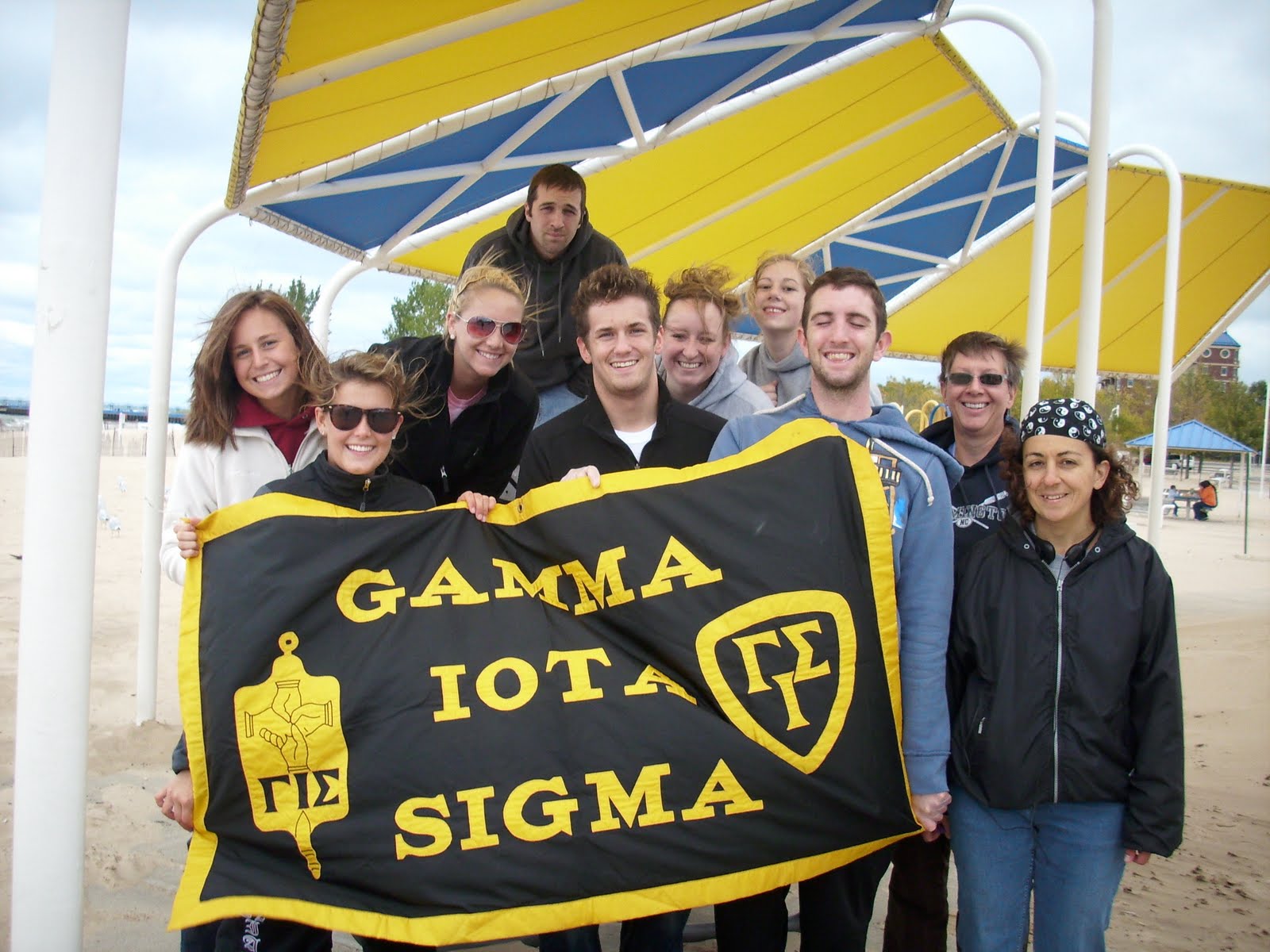
The site coordinator for Silver beach was the Gamma Iota Sigma professional fraternity at Olivet College. They brought the bags and gloves and data sheets for all of us to work with.

We gathered approximately 40 pounds of trash including hundreds of cigarette butts and pop caps, lots of miscellaneous plastic bits and straws, bottles and cans, balloon bits still attached to ribbons, and one weathered sleeping bag.


Last year over 5,000 people took part in this cleanup. This year it was expanded into Wisconsin, so there will probably be even more participants.

I picked up a lot of trash as I walked the shoreline last year. It felt great to be part of a larger group caring for our lakes yesterday.