The 1,000-Mile Great Lakes Adventures

Saturday, September 28, 2013

The Glaciers as Artist...

While on Kelleys Island in Lake Erie, I hiked to the Glacial Grooves State Memorial.
When I give lectures about the Great Lakes, I always mention how these lakes were formed during the last ice age by a series of glaciers that came down from the north to scour out the lake basins. On Kelleys Island, you can see the handiwork of the glaciers stretching over this preserved 3 acres that still clearly show the hand of the glaciers.


These grooves scoured in a limestone bed thousands of years ago are the most famous glacial grooves in the world.


Much of this area was covered in glacial till (dirt and rocks deposited by the melting glaciers) until the 1970s. Excavation was a meticulous process. Today, an almost 400 feet long stretch of grooves is exposed and protected for us all to marvel at.


Saturday, September 21, 2013

The Lake Erie Water Snake

Once threatened, now on the rebound!

While exploring the islands in Lake Erie, I stopped in at Ohio State University's research center on South Bass Island.

I met with Kristin Stanford (The Snake Lady) in her newly renovated lab.


Renovated lab for snake research

The Lake Erie Water Snake (LEWS) was classified as threatened -- and almost made the endangered list -- back in the late 1990s. At one time it was estimated that fewer than 2,000 of these snakes were living on the Lake Erie Islands. 

The "Snake Lady" Kristen Stanford

The subspecies of this snake that lives out on the islands, Nerodia sipedon insularum, has possibly the most restricted range of any snake in the world as it just lives on a handful of islands in the lake. A related subspecies lives along part of the Lake Erie shoreline, but these are generally darker in color and only make it out to the island if they stowaway on a boat (which they occasionally do).

The population of the LEWS has rebounded to over 10,000 on the islands. Conservation and education efforts have helped restore their numbers. The round gobi, an invasive species of fish, has also helped the snakes...by coming over for dinner.

Do we owe the round goby our gratitude?

These jars (below) are filled with the stomach contents from captures and released LEWS. Virtually every meal eaten by these snakes consisted of round goby. This invasive fish has flourished in Lake Erie. It is estimated that there are 35 of these fish for every square meter of lake bottom near the islands. 

The LEWS no longer has to search far for a meal!

Round Goby -- it's what's for dinner!


Snake tag (implanted under the skin)

Work with the LEWS is ongoing. The process of gathering and tagging the snakes was featured on an episode of Dirty Jobs.
Learn more HERE.

Sunday, September 15, 2013

The World's Largest Celestite Geode

I've taken a hammer to quite a few geodes in my life, but I had never seen anything like this underground geode on South Bass Island in Lake Erie. 

Discovered in 1897 when islanders were trying to dig a well, this geode is filled with massive celestite crystals comprised of Strontium Sulfate (SrSO4).

This geode has room for over a dozen people 

Surrounded by crystals!

The geode/cave is privately owned 
and is called the
Crystal Cave.

Crystals up close -- each crystal has 14 faces


This is the largest single crystal in the cave -- it weighs nearly 200 pounds


These are the largest known celestite crystals in the world.


Thursday, September 5, 2013

The Battle of Lake Erie!!

The Niagara


My current adventure has transported me off the shoreline and out onto the ISLANDS within our Great Lakes.


This Labor Day, I traveled to South Bass Island's Put-in-Bay to take part in the bicentennial reenactment of the Battle of Lake Erie. This naval engagement between the Americans and British was a turning point in the War of 1812.

Sixteen tall ships gathered in Lake Erie for this event which was the largest reenactment of a naval battle in American history.

Cannon fire!

My ship had a tiny cannon

It was fascinating to take part in this Great Lakes event.

The Lynx

The Niagara fires from both sides

"We have met the enemy, and they are OURS!"

Check out the video below for glimpses of the action!

{This experience will be part of my next book

A 1,000-Mile Great Lakes
ISLAND ADVENTURE!

Due to be released in 2015.


Saturday, August 31, 2013

Enbridge Oil Pipeline Spill...3 Years Later

Three years ago, an underground oil pipeline operated by Enbridge Energy Partners (Enbridge) ruptured and leaked over a million gallons of heavy tar sands oil into a creek just east of where I live. The creek (Talmadge Creek) flowed into the Kalamazoo River which flows through the center of my town, Battle Creek. In the early days of the leak, it smelled like every road in the county had just been paved with hot asphalt. But it was just the stench from the lighter parts of the oil evaporating off the river into the air. 

While some of the oil was captured in booms and skimmed off the top of the water, the heavier part of the oil sank to the bottom of the river. Enbridge skimmed the rivers, then spent the second year agitating the riverbed to liberate the heavier portion and gather it for disposal. 

Then, Enbridge tried to walk away from the site 
saying it was taken care of.

That's when the EPA again tested the riverbed and estimated that at least 80,000 gallons (and as much as three times that amount) still remains submerged in the river.

So, the clean-up of the largest pipeline spill in America's history is in its third year. Sections of the river are closed, heavy machinery and conveyance piping to remove the toxic sludge will be brought in and assembled.

This spill contaminated 35 miles of the Kalamazoo River...which flows into Lake Michigan. The spill was contained before it reached the Great Lake, but it did contaminate Lake Morrow about 80 miles inland from Lake Michigan.


For insight into the tar sands mining operation in Alberta where this toxic, sludgy form of petroleum is mined, watch this Ted Talk

For the latest on clean-up efforts in the Kalamazoo River, go here.

Enbridge is working to DOUBLE the amount of tar sands oil they  move through pipelines to refineries in Michigan and Ohio. 
Read about it here.


Friday, August 23, 2013

The Battle of Lake Erie Reenactment

"I am Josiah Briggs!"

...or I will be him (briefly) for the historic reenactment of the Battle of Lake Erie this Labor Day! Josiah Briggs was an American private who served on the schooner Scorpion in this historic naval battle. 

This historic clash marked the first time the British Navy ever lost a battle. The Americans captured the entire squadron of British ships.

Commodore Perry wrote the famous message to his superiors to tell of the Victory:


"We have met the enemy and they are ours!"

Perry's Victory and International Peace Memorial on South Bass Island


It is perfect timing to have this historic reenactment take place when I am embarking on my third Great Lakes Adventure, this time exploring many of the islands of the Great Lakes! This experience will be part of my third book, 

A 1,000-MILE GREAT LAKES
 ISLAND ADVENTURE

which will be published by Crickhollow books of Milwaukee in 2015.

Learn more about this historic event at:  http://battleoflakeerie-bicentennial.com/

And about my participation HERE

Sunday, August 11, 2013

Tales from the Book Tour: 4 Events in 4 Days!

I traveled Michigan's midsection this week touring with my book. It's always fun to meet people who care about our Great Lakes!  I had events in Glen Arbor, Alpena, Big Rapids and East Tawas.

Alpena Public Library


I also had time to poke around the old Rockport Mine for fossils.

Rockhounding at Rockport Mine


Pier at Rockport Mine


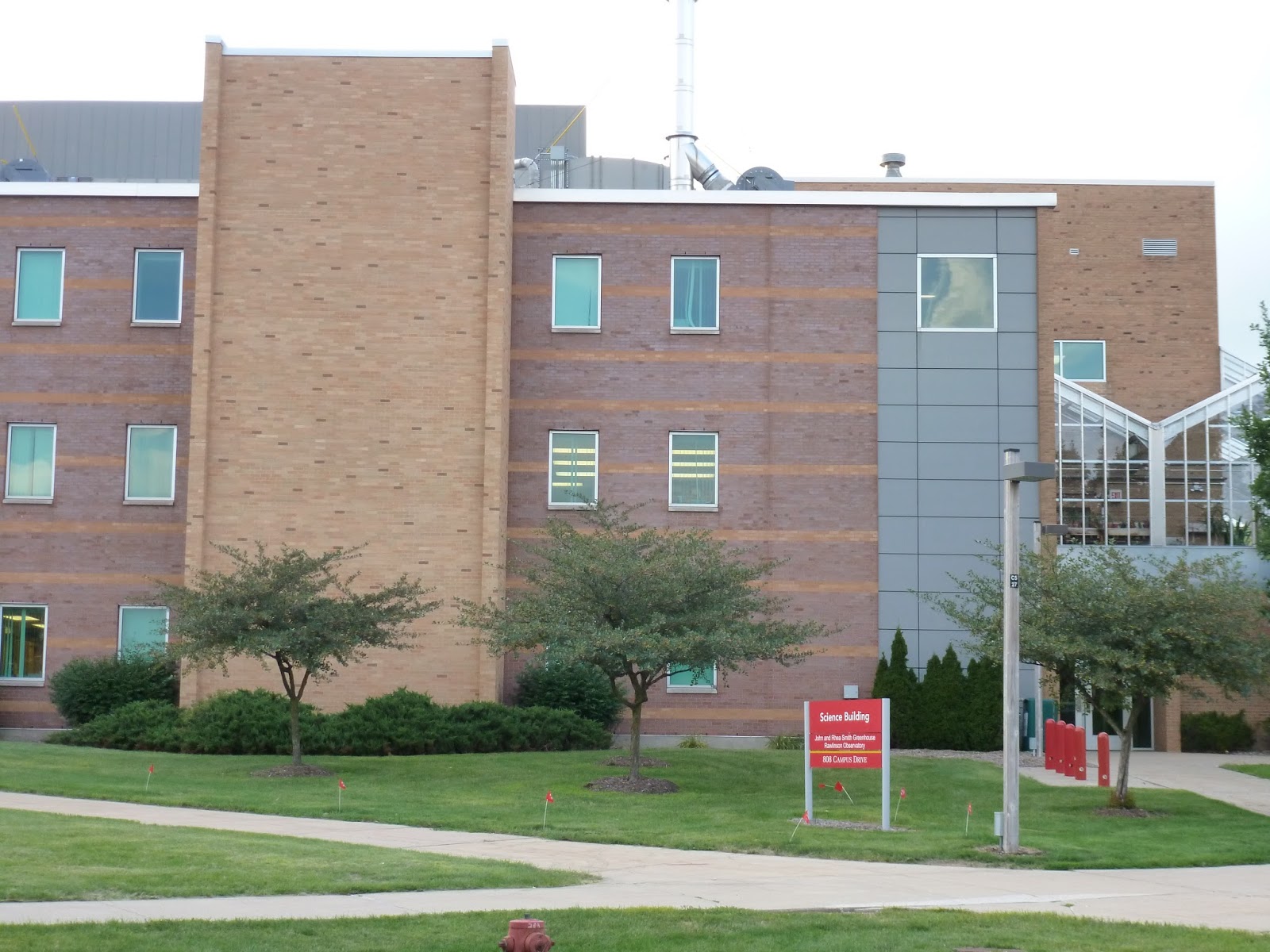
I spoke to the Rock, Gem and Mineral Club in Big Rapids. They meet at Ferris State University.

Science building at Ferris State

Petoskey stone (in the rough)

Boots, Books, and ROCKS 


Lecture venue in East Tawas (sponsored by the Friends of the Library in East Tawas)

Thanks to everyone who came out to hear me read or give a talk about our Great Lakes!

Friday, August 9, 2013

Kayaking to Power Island (in Grand Traverse Bay)


Here is another island I've explored on my 
1000-MILE GREAT LAKES 
ISLAND ADVENTURE.


Did you know that there are over 30,000 islands in the Great Lakes and their connecting waters?

Sunday, August 4, 2013

Pipers-a-Ploving

One of the components of my new adventure
[A 1000-Mile Great Lakes ISLAND Adventure]
is to explore and take part in research projects 
on Great Lakes islands.

In July, I had the privilege of assisting
 with the conservation of the endangered 
PIPING PLOVER.

This diminutive shorebird has been dwindling in numbers due to loss of habitat and increased predation.

The majority of the Great Lakes population of piping plovers nests in the Sleeping Bear Dunes National Lakeshore.

This year there were nine nests on North Manitou Island
 and one on South Manitou. 

Male piping plover on South Manitou Island

I spent three days on South Manitou watching for the nesting pair there and their chicks.  

Then, I went to North Manitou Island to assist the naturalist Alice Van Zoeren in keeping track of the population there.

Dimmick's Point is closed during nesting season

Using the big scope to find

and identify the little birds


Naturalist, Alice Van Zoeren, near a nest exclosure

Since this bird is endangered, there is funding in place to help restore their numbers. One of the most effective tools researchers have is to identify the nest early and protect them from predators with an exclosure (called that because its function is to keep things out). Adult birds can get in and out to take care of the nests, but predators cannot get at the eggs. 

This intervention alone has increased the hatching success from ~30% to over 90%. Researchers will also take steps to collect any eggs that are abandoned and transport them to a biological station in Pellston -- run by the University of Michigan -- where eggs are incubated and chicks taken care of until they can be released into the wild again.

This is a piping plover nest (no eggs)


Dimmick's Point on North Manitou Island

Watching over the piping plovers was fascinating, difficult work.
The full story of my island adventures will be in my next book:
A 1000-MILE GREAT LAKES ISLAND ADVENTURE


There are three birds in this shot. Can you find them all?