The 1,000-Mile Great Lakes Adventures

Sunday, May 2, 2021

Clay Cliffs

 Loreen Niewenhuis is an author, adventurer, and dynamic speaker. 

She has completed a trilogy of 1,000-mile journeys exploring the Great Lakes and has authored three books about these adventures. 


To learn more about her work, or to engage her as a speaker, go to 

http://www.laketrek.com/great-lakes-speaker/


I live in Traverse City, Michigan, and one of the reasons I moved here was for the many hiking trails in the region. Sleeping Bear Dunes National Lakeshore is nearby and I've hiked most of the trails and all of the shoreline there. 

Northwest of Traverse City is the Leelanau Peninsula. This gorgeous area has its own conservancy organization working to protect and preserve natural areas. One of my favorite trails on this peninsula is Clay Cliffs Natural Area located just north of Leland.


The trail has two overlooks, one of Lake Leelanau and one of Lake Michigan.

Here's a video from the Lake Michigan overlook. Great views of the Manitou Islands.


Here's the view of Lake Leelanau:


The wild flowers were in bloom today...
the trout lily amongst the trillium...


And more views out on Lake Michigan...


Thursday, April 29, 2021

Empire Bluff Trail in Sleeping Bear Dunes National Lakeshore

Loreen Niewenhuis is an author, adventurer, and dynamic speaker. 

She has completed a trilogy of 1,000-mile journeys exploring the Great Lakes and has authored three books about these adventures. 


To learn more about her work, or to engage her as a speaker, go to 

http://www.laketrek.com/great-lakes-speaker/


 I took a hike up the Empire Bluff Trail today. This is the most used trail in 

Sleeping Bear Dunes National Lakeshore.


 There was a thick fog clinging to the surface of the cold lake. It obscured the view at times, then the fog would roll up the dunes and open up the view for a moment. It was lovely, and I had it all to myself.


 The view from the top!


Wednesday, February 24, 2021

Hemlock Wooly Adelgid


Loreen Niewenhuis is an author, adventurer, and dynamic speaker. 

She has completed a trilogy of 1,000-mile journeys exploring the Great Lakes and has authored three books about these adventures. 


To learn more about her work, or to engage her as a speaker, go to 

http://www.laketrek.com/great-lakes-speaker/


There is an invasive species that has been decimating hemlock trees in America for decades. It is a small insect similar to an aphid called the wooly adelgid.
This insect is native to Asia and made its way to America via imported plants in the 1950s. It has  been slowly spreading for decades and has made its way to northern Michigan. This pest has recently been found in Sleeping Bear Dunes National Lakeshore. 

I often hike in and around Sleeping Bear Dunes and have seen many mature hemlock trees in these forests.

One of my favorite hikes is at the Traverse City Commons, and there are some massive hemlocks there. 

Check out the view from the wooded dunes:


There is a hemlock that I visit there, and after the recent storms, I was sorry to see it had developed a crack in the trunk. 


These trees are the preferred feast for the wooly adelgid. They congregate on the underside of the needles and suck the sap out of the tree. The needles turn brown and new growth is inhibited. Infested trees can die within 4-10 years.

Trees can be treated with pesticide and can be saved if infestation is caught early.

Severe winters helped to slow the spread of this pest.


Update (info from NPS):  Though the tiny insects don’t move far on their own, they can be blown by wind or hitchhike on birds or mammals – including humans - that come into contact with an infested branch. In a similar way, cars, boats, tents, or RVs parked under infested trees may be able to transport the insects to new locations.


So, clean your boots and NEVER transport wood from one area to another.

Sunday, February 14, 2021

Shadows


Loreen Niewenhuis is an author, adventurer, and dynamic speaker. 

She has completed a trilogy of 1,000-mile journeys exploring the Great Lakes and has authored three books about these adventures. 


To learn more about her work, or to engage her as a speaker, go to 

http://www.laketrek.com/great-lakes-speaker/


I have continued to hike during this latest blast of polar air and steady snowfalls. There's something special about hiking in untouched snow, of seeing the whiteness sparkle in the sunshine. 

I especially like winter hikes when the sun is out because the light bounces and becomes more brilliant. 

Here's a look at some shadows on my hike today:


Wednesday, February 10, 2021

Ice on the Great Lakes


Loreen Niewenhuis is an author, adventurer, and dynamic speaker. 

She has completed a trilogy of 1,000-mile journeys exploring the Great Lakes and has authored three books about these adventures. 


To learn more about her work, or to engage her as a speaker, go to 

http://www.laketrek.com/great-lakes-speaker/


This winter, the Great Lakes have had very little ice coverage. 


On average, 

ice coverage is down 22% since 1973. 

Less ice on the lakes means more evaporation and more lake effect snow. Warming waters destabilize the lake's ecosystem making it more vulnerable to disruptions and crashes.

The temperature finally dipped in February and I made my way to the lakeshore to check out ice formation on Lake Michigan. It was brutally cold, in the teens even before the wind chill was considered. It was comfortable (with the correct layering and coat) when hiking with the wind to my back, but walking into the wind was tough.

Check out the icy beach:


Wednesday, February 3, 2021

Great Lakes OTTERS

 Loreen Niewenhuis is an author, adventurer, and dynamic speaker. She has completed a trilogy of 1,000-mile journeys exploring the Great Lakes and has authored three books about these adventures. 


To learn more about her work, or to engage her as a speaker, go to 

http://www.laketrek.com/great-lakes-speaker/


Did you know that there are otters in the Great Lakes? Have you ever seen one?

During my adventures, I have seen otters on three of the Great Lakes (Michigan, Huron and Superior). I saw otter tracks on North Manitou Island. I watched them feed as the sun set on Lake Huron.

This week I took a drive out to Leland (Michigan) and saw something on the ice in the harbor. I parked as the otter finished chewing what it had caught and slid back into the harbor. 

I walked out on a dock to get a closer look and the otter surfaced again, spent some time chewing, then slid back into the water. 

Otters are fun to watch, especially if there is more than one. They are playful and animated.

Check out my photo and video from this encounter...and keep your eyes open for your own otter sighting.


Sunday, January 24, 2021

Snowshoeing Palmer Woods Reserve

Loreen Niewenhuis is an author, adventurer, and dynamic speaker. 

She has completed a trilogy of 1,000-mile journeys exploring the Great Lakes and has authored three books about these adventures. 


To learn more about her work, or to engage her as a speaker, go to 

http://www.laketrek.com/great-lakes-speaker/


We're finally getting some snow here in Michigan's NW lower peninsula. I've had my snowshoes in my car for several weeks, but today was the first time I took them out for a hike.

I've been meaning to get out to the Palmer Woods Forest Reserve, one of Leelanau Conservancy's properties. This wooded reserve is located about 2.5 miles south of M22 on S. Wheeler Road near Maple City. 


There are both mountain bike (or fat tire) trails along with trails dedicated for hiking.
I avoid trails where mountain bikes are allowed during the mild months...I don't like having to watch my back for bikes. During the winter, these trails are quiet, and the dedicated trails make for a relaxing hike.


Some of the trails had been groomed for cross-country skiing, so I stayed off those (or hiked off to the side) so as not to mess up the grooming with my snowshoe tracks.
Check out some photos and a video from my snowshoeing hike:


The Great Lakes have set a record for lack of ice this year. Read more HERE.


Wednesday, January 13, 2021

Trees

Loreen Niewenhuis is an author, adventurer, and dynamic speaker. 

She has completed a trilogy of 1,000-mile journeys exploring the Great Lakes and has authored three books about these adventures. 


To learn more about her work, or to engage her as a speaker, go to 

http://www.laketrek.com/great-lakes-speaker/


I get out to hike at least twice a week no matter the weather. I love being out there in the elements, pushing against the wind, balancing on ice, pushing to get up the next hill.

There's always something to see.

Wildlife, plants, fungi, tracks, clouds.

This week, I hiked the trails at the The Village at Grand Traverse Commons. There are a few miles of trails looping through and up some tall, wooded dunes.

I came across a tree being dismantled by pileated woodpeckers. This bird was the inspiration for 'Woody Woodpecker,' and its call is similar to the laughter of the cartoon character.

Check out these photos and one video:


The woodpecker is at the top of the above photo.


There is a massive hemlock (~12 feet in diameter) on these trails. It's quite a specimen!


Sunday, January 3, 2021

First Hike of 2021

Loreen Niewenhuis is an author, adventurer, and dynamic speaker. 

She has completed a trilogy of 1,000-mile journeys exploring the Great Lakes and has authored three books about these adventures. 


To learn more about her work, or to engage her as a speaker, go to 

http://www.laketrek.com/great-lakes-speaker/


Happy New Year!

My first hike of the New Year was out at the Dune Climb in Sleeping Bear Dunes National Lakeshore.

The first dune off the parking lot was dotted with kids on sleds. It's a great ride, even when there's just a dusting of snow.


I love to watch the interplay of sand and snow on these dunes:


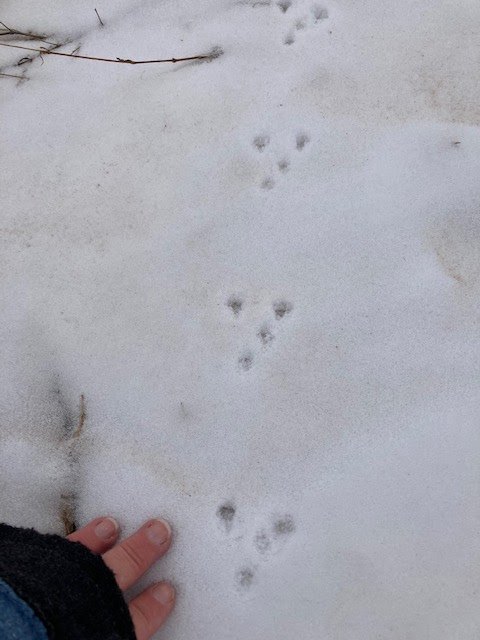
And the sand and snow reveal which creatures are on the move in the landscape.


I love this landscape in any season. It's an extra-challenging workout when the snow begins to drift amongst the dunes.
A late season freighter moved through the Manitou Passage today (below).


Happy 2021 everyone. 

We made it through 2020. Yay!